

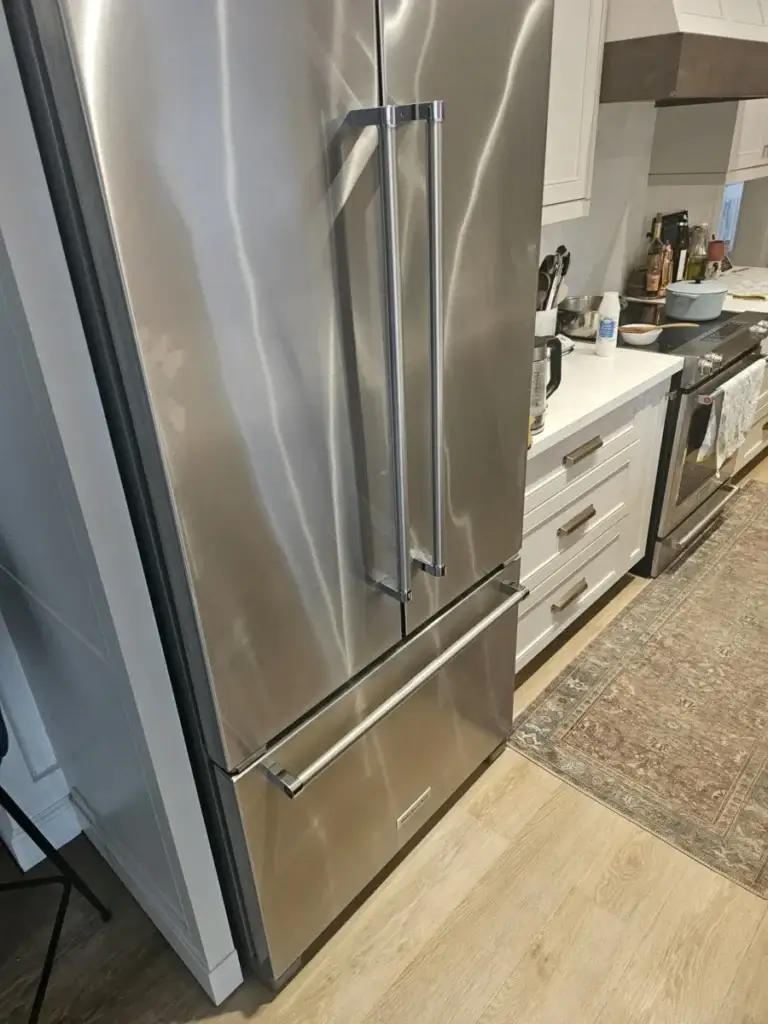
3-second answer: A refrigerator leaking water almost always traces to one of two things. If the water is inside — pooling under the crisper drawers or dripping down the back wall — the cause is nearly always a clogged defrost drain: melt water from the auto-defrost cycle can’t reach the pan underneath, so it backs up. If the water is on the floor, suspect the water supply line, inlet valve, water filter, or a cracked drain pan (on models with an ice maker or dispenser). Both interior causes and most floor causes have a DIY fix; a failed inlet valve or sealed-system issue needs a tech.
Water pooling fast, or coming from a model you’d rather not take apart? Call 647-834-4646 for same-day refrigerator service across Toronto, North York, Markham, Vaughan, Bradford, and York Region. $89 service-call, waived if you approve the repair.
This is the exact diagnostic flow our refrigerator repair technicians use: figure out where the water is coming from first, because that single clue narrows six possible causes down to one or two. Below are the causes ranked by how often we see them, a five-step fix, and the honest line on when a leak means it’s time to call. (A leak is a different problem from a fridge that isn’t cooling properly — if yours is doing both, the not-cooling side usually takes priority.)
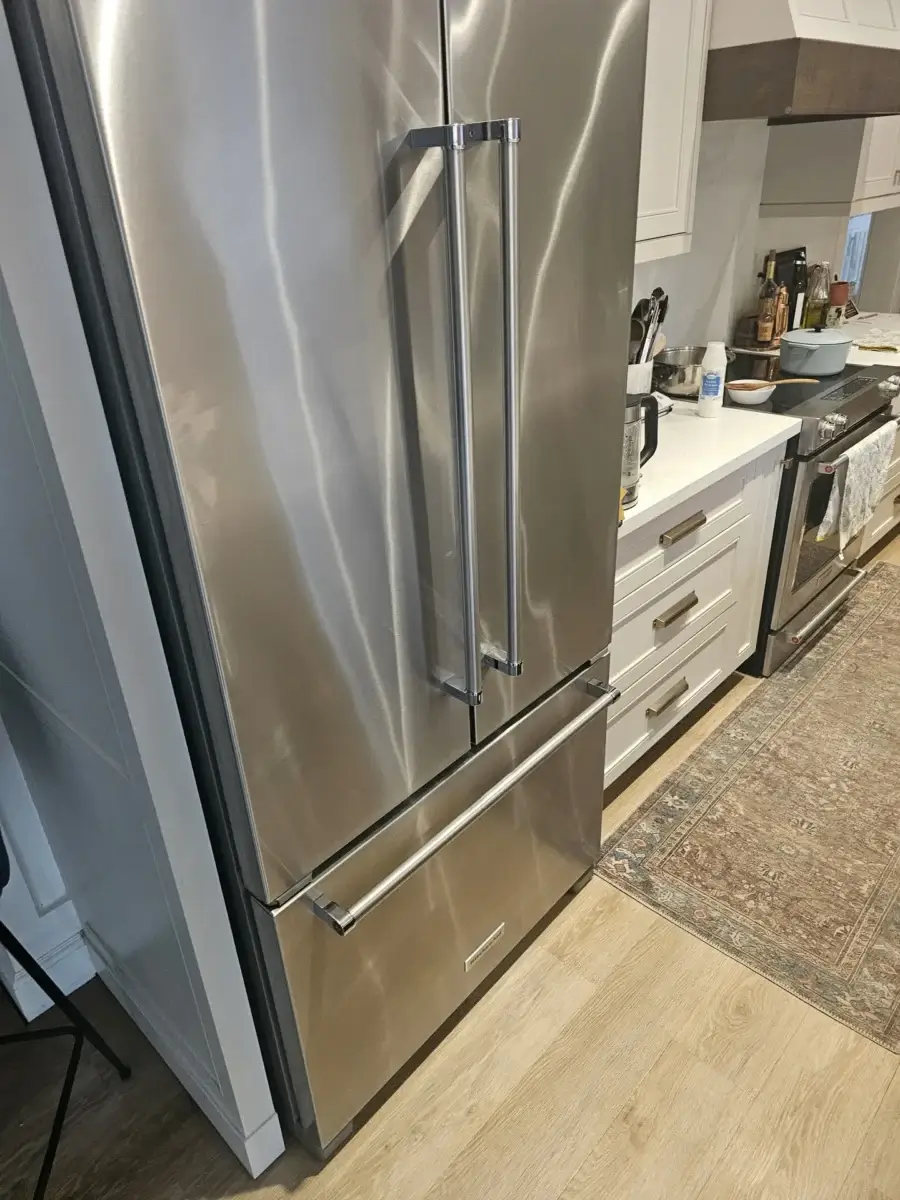
First question: where is the water coming from?
Before you touch anything, work out which of these two patterns you have. It cuts the diagnosis in half.
- Water inside the fridge — a puddle under the crisper drawers, water dripping down the rear interior wall, or a sheet of ice forming on the freezer floor. This points almost entirely to a clogged defrost drain, occasionally a bad door seal.
- Water on the floor / leaking from the bottom — a puddle in front of or under the unit, with the inside dry. This points to the water supply line, water inlet valve, water filter, or the drain pan underneath — all of which sit at the bottom or back of the fridge.
If you have an ice maker or a door water dispenser, floor leaks become more likely because there’s a water line running to the unit that can crack, loosen, or freeze.
Top causes of a refrigerator leaking water
Ranked roughly by how often they’re the culprit:
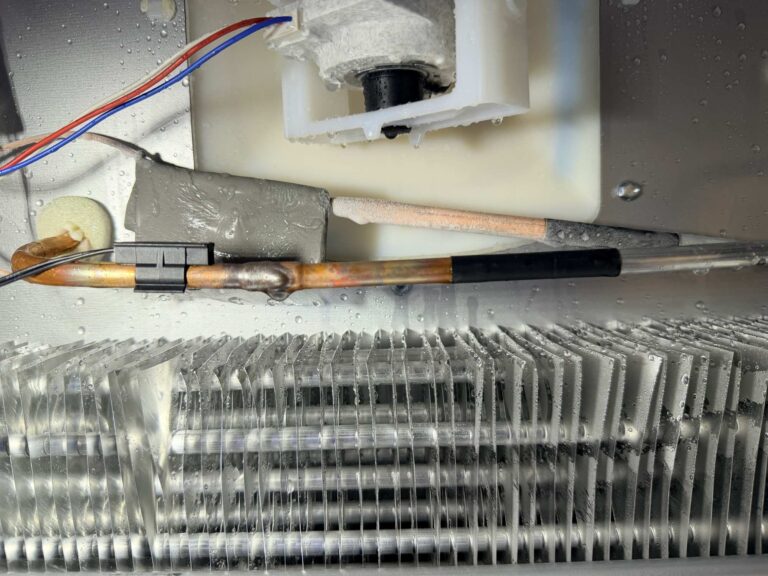
- 1. Clogged defrost drain (most common interior leak). Every fridge runs an automatic defrost cycle; the melt water is supposed to flow through a small drain hole at the back of the freezer floor into a pan beneath the unit. Food debris and ice plug that hole, so the water backs up and spills inside. This is the number-one cause of water under the crisper drawers.
- 2. Frozen, cracked, or loose water supply line. On fridges with an ice maker or dispenser, the plastic or copper line feeding water can crack, freeze, or work its connection loose — putting clean water straight onto the floor.
- 3. Clogged or badly seated water filter. A cracked filter housing, the wrong filter, or one that isn’t fully twisted in will weep water. This is a frequent cause right after a filter change.
- 4. Faulty water inlet valve. The valve that opens to let water into the ice maker/dispenser can fail or leak continuously — a floor leak that doesn’t stop. This one usually needs a technician.
- 5. Cracked or overflowing drain pan, or an un-level fridge. The pan under the unit that catches defrost water can crack, or if the fridge tilts the wrong way the water never reaches the pan properly and runs onto the floor.
- 6. Worn door seal (gasket). A door that doesn’t seal — or is left ajar — lets warm, humid air inside, which condenses into excess water and frost. Often paired with the fridge working harder and frost building up.
One thing a refrigerator leaking water is not: a refrigerant (“freon”) leak. A sealed-system refrigerant leak doesn’t produce a puddle — it shows up as the fridge losing its cold, not as water on the floor. If your real problem is warming food rather than water, that’s a different repair.
How to fix a leaking refrigerator
This five-step flow resolves the large majority of fridge leaks. Work in order — the first two steps cover the most common causes.
- Find the source. Open the fridge and check under the crisper drawers and down the back wall (interior leak = defrost drain). Then check the floor at the front and pull the unit out to look behind it (floor leak = water line, valve, filter, or pan).
- Clear the defrost drain (interior leaks). Unplug the fridge. Empty the freezer and find the small drain hole at the bottom of the freezer compartment. Flush it with warm water using a turkey baster, and gently clear any ice plug. If frost has built up, let the freezer defrost fully before restarting.
- Check the water line and filter (floor leaks). Shut off the water supply to the fridge. Inspect the supply line and its fittings for cracks, frost, or a loose connection, and reseat or replace the line. Check that the water filter is the correct one, fully seated, and not cracked — re-twist or replace it.
- Inspect the drain pan and level the fridge. Look at the pan underneath for cracks or overflow, and use a level to confirm the fridge tilts very slightly back (not forward) so defrost water drains correctly.
- Check the door seal — then call if it persists. Make sure the door gasket seals all the way around and nothing is propping the door open. If the leak continues after all of this, the likely cause is a failed water inlet valve or a sealed-system fault, which needs a technician.
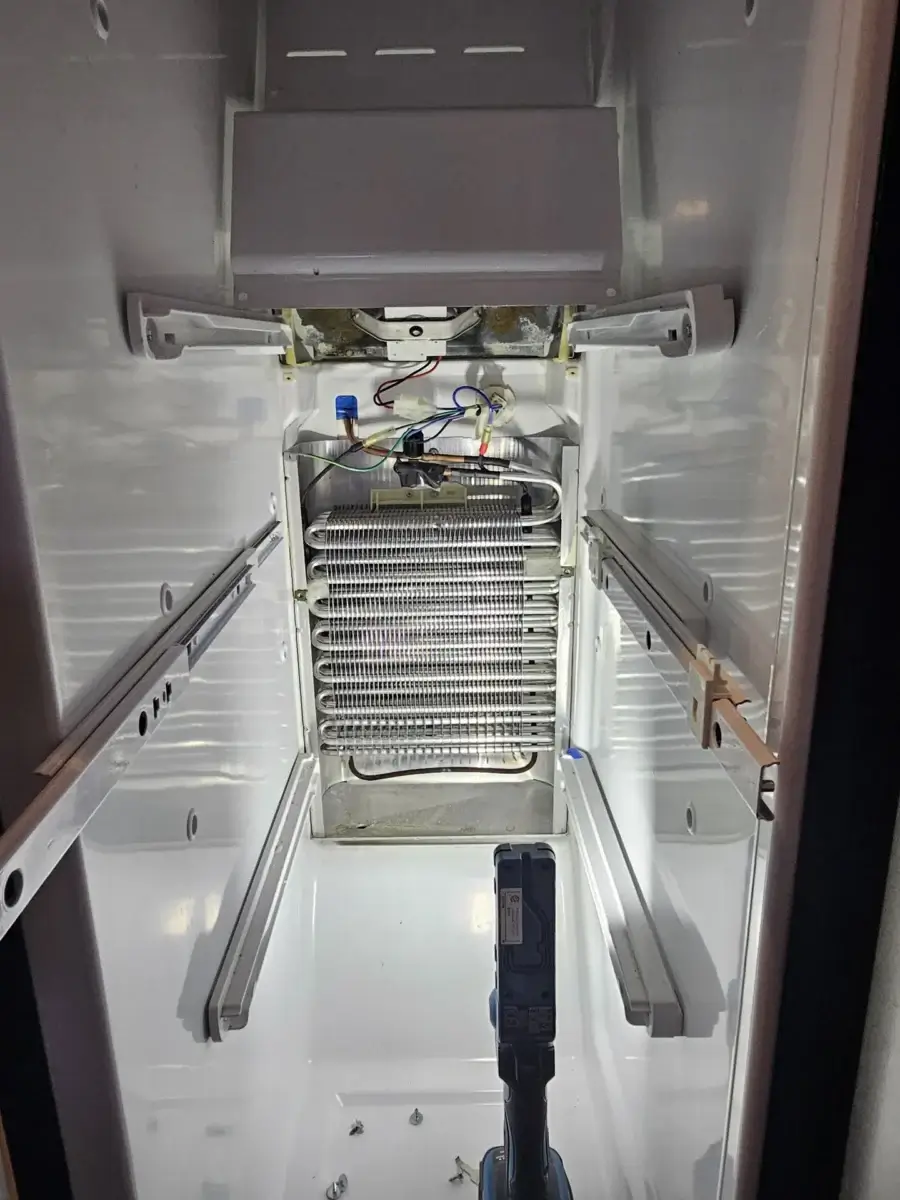
Refrigerator leaking water inside (under the crisper drawers)
An interior leak — a puddle sitting under the vegetable drawers, or water trickling down the inside back wall — is the classic clogged-defrost-drain symptom. As frost melts during the defrost cycle, the blocked drain forces the water sideways and forward instead of down into the pan, so it collects in the lowest interior point, which is under the crispers. Clearing the drain (step 2 above) fixes it in most cases. If it returns within days, the drain may have a recurring ice plug that needs a small heater clip or a technician’s attention.
Refrigerator leaking water from the bottom / onto the floor
A leak that ends up on the floor with a dry interior is coming from the bottom or back of the unit. On a fridge with a dispenser or ice maker, start with the water line and filter — they cause most floor leaks and are the easiest to check. If those are dry and tight, look at the drain pan and whether the unit is level. A continuous, clean-water floor leak that you can’t trace to the line or filter usually points to the water inlet valve, which is a tech-level part.
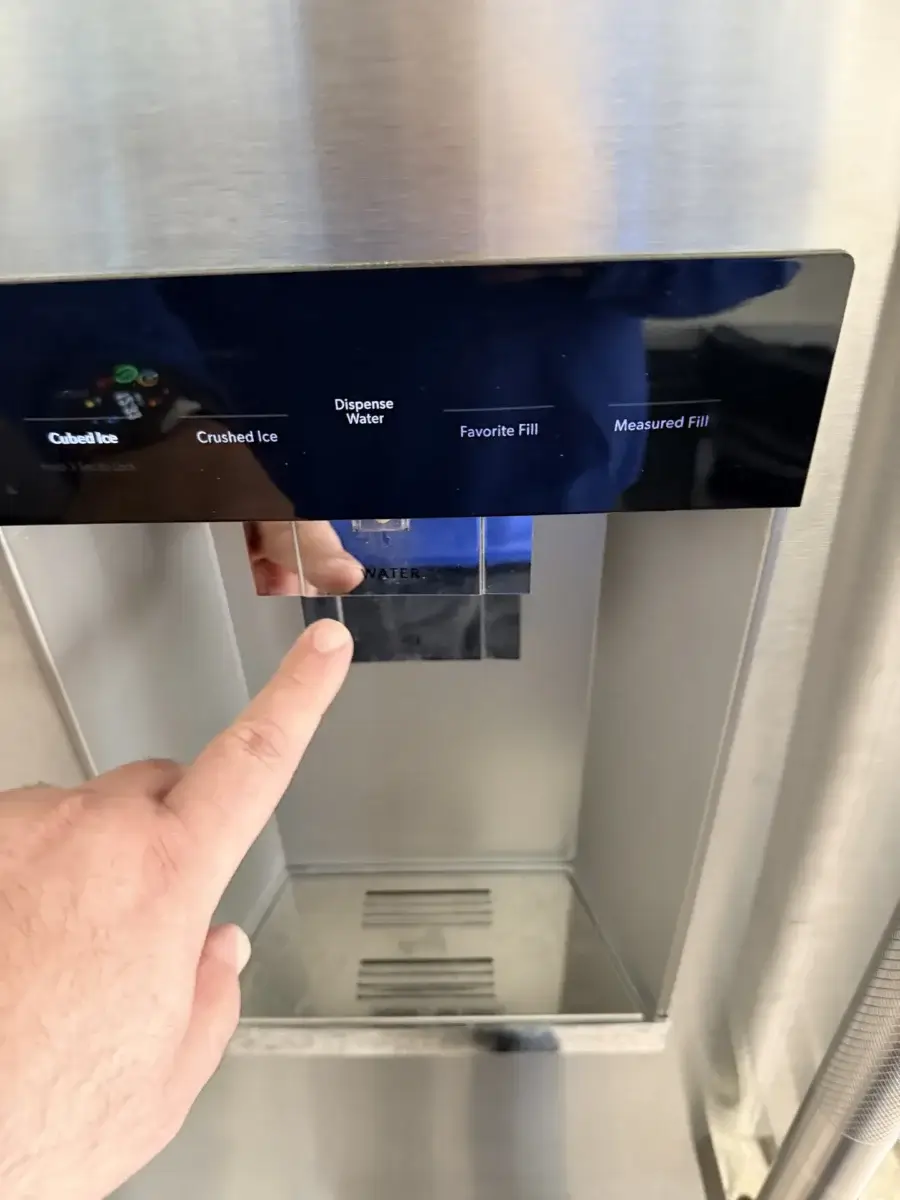
Cleared the drain, checked the line and filter, and it’s still leaking? A continuous floor leak usually means a failed water inlet valve, and a recurring interior leak can mean a defrost-system fault — both are technician-level repairs. Same-day GTA refrigerator service across Toronto, North York, Markham, Vaughan, Bradford, and York Region.
Is a leaking refrigerator dangerous?
A small interior leak isn’t dangerous, but a leak you ignore causes real damage:
- Slip and floor damage. Water pooling on the floor is a slip hazard and, left long enough, warps hardwood and laminate and seeps under the unit.
- Mould and odour. Standing water inside the fridge or under it grows mould and creates a musty smell that’s hard to clear.
- Electrical risk. A refrigerator is plugged into a live outlet. Water spreading toward the cord or outlet is a reason to unplug the unit and address the leak promptly.
None of this is an emergency on day one, but a fridge leak is the kind of small problem that gets expensive if it’s left for weeks.
When to call a refrigerator repair pro
Call a technician when: the leak continues after you’ve cleared the defrost drain and checked the line and filter; the floor leak is continuous and clean (likely the inlet valve); the defrost-drain leak keeps coming back (defrost-system fault); or the fridge is leaking and not cooling, which points to a sealed-system problem. These are parts and diagnostics that need the right tools and refrigerant handling. We carry common inlet valves, water lines, and filters on the truck and back every repair with a 90-day warranty on parts and labour.
Preventing future fridge leaks
- Clean the defrost drain once or twice a year — a quick flush with warm water keeps the most common leak from ever starting.
- Replace the water filter on schedule (typically every 6 months) and make sure it’s fully seated and the correct model.
- Keep the fridge slightly tilted back and the door seal clean so doors close fully.
- Don’t overpack the fridge against the back wall, which can block airflow and the drain area.
Fridge doing more than leaking — running warm, frosting up, or making noise? Read our refrigerator repair guide or call our team for a same-day diagnosis across the GTA.
Refrigerator leaking water FAQ
Why is my refrigerator leaking water inside?
An interior leak — water under the crisper drawers or down the back wall — is almost always a clogged defrost drain. Melt water from the defrost cycle can’t reach the pan underneath, so it backs up and pools inside. Unplug the fridge and flush the small drain hole at the bottom of the freezer floor with warm water to clear it.
Why is my refrigerator leaking water from the bottom?
A floor leak with a dry interior usually comes from the water supply line, water filter, drain pan, or water inlet valve — all at the bottom or back of the unit. On models with a dispenser or ice maker, check the line and filter first; a continuous clean-water leak you can’t trace usually means the inlet valve, which needs a technician.
How do I unclog a refrigerator defrost drain?
Unplug the fridge, empty the freezer, and find the small drain hole at the bottom of the freezer compartment. Flush it with warm water using a turkey baster and gently clear any ice plug. If the freezer is heavily frosted, let it defrost completely before restarting. If the clog returns within days, the drain may need a heater clip or a technician.
Can a water filter cause my fridge to leak?
Yes — a cracked filter housing, the wrong filter model, or a filter that isn’t fully twisted in is a common cause of leaks, especially right after a filter change. Re-seat the filter firmly, confirm it’s the correct part, and replace it if the housing is cracked.
Is a refrigerator water leak an emergency?
Not on day one, but don’t leave it. Standing water is a slip hazard, warps flooring, and grows mould, and water spreading toward the cord or outlet is an electrical concern. A small leak becomes an expensive one if it’s ignored for weeks, so clear it or have it repaired promptly.
Why is my fridge leaking water but it’s still cold?
That’s the normal pattern for a leak — most fridge leaks (clogged defrost drain, water line, filter, drain pan) have nothing to do with cooling, so the fridge stays cold while it leaks. If it’s leaking and also warming up, that’s a separate, more serious sealed-system issue that needs a technician.
Could a refrigerant (freon) leak be causing the water?
No. A refrigerant leak doesn’t produce puddles of water — it shows up as the fridge losing its cold, not as water on the floor. If your actual problem is food warming rather than water pooling, that’s a sealed-system repair, not a leak fix, and it requires a licensed technician.
Why does my fridge keep leaking after I cleared the drain?
A recurring interior leak after clearing the defrost drain usually means the drain re-freezes (an ice plug keeps forming), which can need a small drain heater clip, or there’s a defrost-system fault. A recurring floor leak points to the water inlet valve. Both are technician-level repairs.
Does an un-level refrigerator cause leaks?
It can. A fridge should sit very slightly tilted back so defrost water drains into the pan and the doors self-close. If it tilts forward, defrost water can run out the front instead of draining, and doors may not seal — both can cause water to appear on the floor.
How much does it cost to fix a leaking refrigerator?
A clogged defrost drain or filter reseat is often a low-cost service-call fix; a water inlet valve, water line, or drain-pan replacement typically runs in the range of $180 to $350 in parts and labour in the GTA, depending on the model. Our $89 service-call fee is waived when you approve the repair, and a tech will tell you honestly if a repair isn’t worth it on an older unit.
When should I call a technician for a leaking fridge?
Call a pro when the leak continues after you’ve cleared the defrost drain and checked the water line and filter, when a clean floor leak won’t stop (likely the inlet valve), when the drain leak keeps returning, or when the fridge is leaking and not cooling. We offer same-day refrigerator service across the GTA, York Region, and Simcoe County at 647-834-4646.
Need a refrigerator technician in the GTA today?
Same-day refrigerator service across Toronto, North York, Markham, Vaughan, Bradford, and York Region. Our technicians arrive with common water inlet valves, supply lines, and filters on the truck, trace the leak to its real source, and back every repair with a 90-day warranty on parts and labour. $89 service-call, waived when you approve the repair.